범위: Fe 함량/순도 및 불순물 원소(Na, K, Ca, Mg, Al, Si, Mn, Cu, Pb, Cd, Cr, Ni, Zn, As 등) 측정
장비: ICP-OES (주요 Fe + 일반 불순물, ppm 수준) / ICP-MS (미량 불순물, ppb 수준)
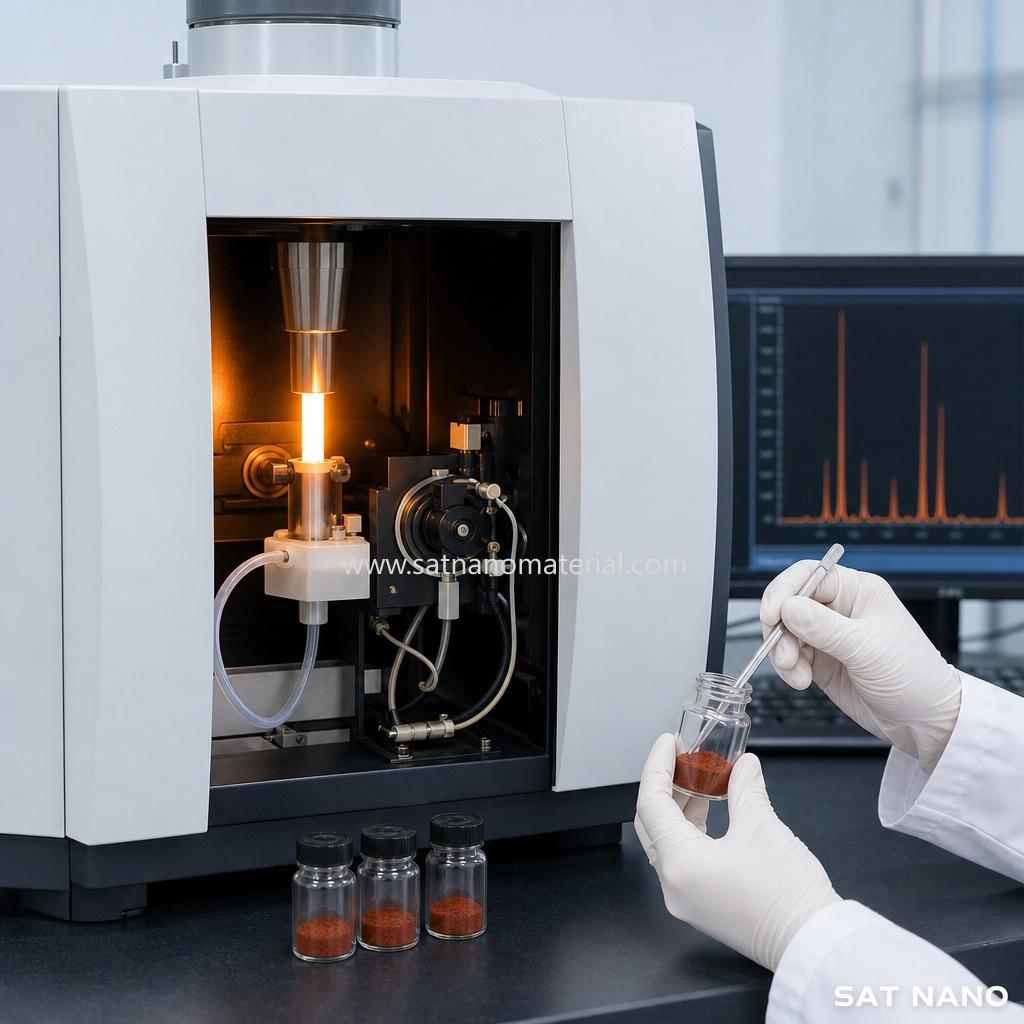
1. 방법 개요
- ICP-OES (유도 결합 플라즈마 – 광학 방출 분광법): 주요 Fe 함량 + 일반 불순물(0.001%–100%), 빠르고 비용 효율적
- ICP-MS (유도 결합 플라즈마 – 질량 분석법): ppb 수준의 미량 불순물, 최고 감도
- ICP는 전체 원소 함량만 측정함: α/γ 상을 구분할 수 없고(XRD 사용), Fe²⁺/Fe³⁺를 구분할 수 없으며(적정/XPS 사용), 산소를 측정할 수 없음(불활성 기체 융해법 또는 원소 분석기 사용)
2. 시료 준비(중요 단계: 분해)
α-Fe₂O₃는 고온 소성 생성물로, 치밀한 격자 구조와 화학적 비활성을 가짐. 분해 과정이 성공 여부를 결정함. 소성 온도가 높을수록 용해가 어려워짐.
선택 A: 마이크로파 분해(권장 — 밀폐 방식, 고온/고압, 가장 완전한 분해)
- 시료: 0.1–0.2 g (먼저 105°C에서 항량이 될 때까지 건조; 건조 기준으로 보고)
- 시약: 진한 HCl 6 mL + 진한 HNO₃ 2 mL (왕수 시스템); Si를 측정하거나 실리카 함유 불순물이 존재하는 경우 HF 0.5–1 mL 추가(반드시 PFA/테플론 용기를 사용 — 유리 사용 금지)
- 예시 프로그램: 180–200°C까지 승온, 20–30분 유지, 개방 전 냉각
- 잔류물이 남는 경우: 새 왕수를 사용해 반복하거나 HF 추가
선택 B: 상압 가열 분해(마이크로파 없이 사용하는 대안)
- 진한 HCl 20–30 mL(또는 왕수)를 사용하고 환류 조건에서 끓는점 부근으로 1–2시간 가열; 필요에 따라 시간 연장
- 고도로 소성된 시료(>800°C)는 산을 반복 첨가하거나 소량의 환원 보조제(예: SnCl₂, 아스코르빈산)가 필요한 경우가 많음 — Fe³⁺를 Fe²⁺로 환원하면 용해가 빨라짐
선택 C: 알칼리 융해(최후 수단)
- 고온에서 리튬 메타붕산염(LiBO₂) 또는 Na₂CO₃ 융해 후 산 침출
- 단점: 많은 염 부하(high TDS)를 유발 → 심각한 간섭 및 높은 희석 발생. 다른 방법으로 시료가 녹지 않을 때만 사용.
HF 안전 참고: HF는 유리와 석영 분무기/토치를 공격함. HF가 포함된 용액은 HF 내성 시료 도입 시스템을 사용하거나 흡입 전 붕산과 착화합해야 함; 항상 전용 보호 장갑을 착용하고 흄 후드에서 작업할 것.
3. 분해 후 처리
- 분해 용액을 정용 플라스크(PFA/플라스틱)로 옮기고 초순수로 정용(예: 100 mL)
- 측정 범위로 희석: 주요 Fe 10–100 ppm; 불순물은 필요에 따라 조정
- 분무화 차이를 방지하기 위해 시료와 표준 용액의 산도를 동일하게 맞춤(일반적으로 산 1–5%)
- 내부 표준 추가(ICP-OES: Sc, Y; ICP-MS: Sc, In, Rh)하여 매트릭스 효과와 드리프트 보정
4. 장비 조건 및 스펙트럼 선
- 권장 선(간섭 최소화):
- Fe: 259.94 nm, 238.20 nm (ICP-OES)
- 불순물: Al 396.15 / Na 589.59 / K 766.49 / Ca 393.37 / Mg 279.55 / Mn 257.61 / Cu 324.75 / Pb 220.35 / Cd 228.80 / Cr 267.72 / Ni 231.60 / Zn 213.86 / Si 251.61 nm
- 각 원소는 ≥2개의 선으로 확인
- 매트릭스 효과: 높은 Fe 농도는 불순물 신호를 억제하거나 증가시킴 — Fe 기반으로 보정용 표준 용액의 매트릭스를 동일하게 맞춤(표준 첨가법이 가장 정확함)
5. 검량 및 품질 관리
- Fe 표준: 순수 철(≥99.99%) 또는 Fe 단일 원소 표준 용액; 불순물은 다원소 혼합 표준 용액 사용
- 전체 절차를 통해 시약 공백 시료를 분석(동일한 산, 동일한 분해 과정, 사용 시 동일한 HF 양 적용)
- 스파이크 회수율: 90–110%이면 통과
- ≥2회 반복 측정; RSD
- 미량 분석: 교차 오염 방지를 위해 산 침지 + 초순수 헹굼으로 분해 용기를 사전 세척
6. 결과 및 보고
- Fe 함량: 측정된 Fe 농도(공백 보정)를 변환하여 계산; 순도의 경우 순도 = 100% − Σ(불순물 함량)(차감법) 사용 — 불순물 목록은 고객/표준 요구사항(예: GB/T, ASTM, 고객 COA 사양)을 충족해야 함
- 건조 기준으로 보고: 건조 조건 및 수분/LOI를 명시
- 권장 보고 내용: Fe 함량, 개별 불순물 함량, 방법(분해 포함), 스펙트럼 선, 검출 한계, 스파이크 회수율, 불확도



 온라인 서비스

